
January 3rd, doors open at 6:00 pm PST
Redlands Church of the Nazarene
1307 East Citrus Avenue
Redlands, CA 92374
Soil Recipes Below!
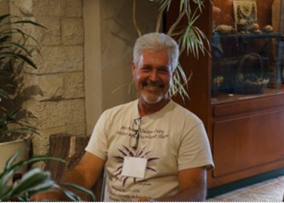
Peter Walkowiak has been fascinated by plants his whole life, but his interest in succulent plants really began in college. By the time he graduated, he had well over 100 plants in his collection.
The succulent bug started up again when his two sons were teenagers. This is when he discovered the world of cactus and succulent clubs, after hearing there was a succulent show in Balboa Park, He joined the San Diego Cactus & Succulent Society on the spot. The following year, he joined the Palomar Cactus & Succulent Society and the CSSA.
He is now a member of all the Southern California Cactus & Succulent Societies, as well as past president of the Palomar Cactus & Succulent Society and the San Diego North County Club. He served on the board of directors of the San Diego Cactus & Succulent Society and the CSSA.
He was the Show Chair for San Diego’s two shows and Palomar’s show and co-chair for the Intercity Show, the largest succulent show in the world.
His collection now numbers well over two thousand plants. About half are cacti, with the remaining consisting of Euphorbias and caudiciforms. Some of the plants he has owned for over 40 years.
Peter has graciously shared his knowledge with us below:
Soil and Fertilizer for Succulents
There are three ingredients for my soil mix. You can substitute other materials and those will be listed below. There are three materials to avoid, peat moss, sand and kor. Both peat moss and kor (coconut husk) are not composted and when they do it turns to muck. Sand compacts and does not dry out or allow good air penetration.
Soil:
60% Perlite #3, substitute pumice; this should be completely wetted and mix, do not remove fines unless excessive.
20% Compost, substitute good potting soil, I get my compost from the green recycling at the local dump and has no manure.
20% DG (decomposed granite); use 1/8 screen to remove gravel from fines. Gravel is for top dressing and fines for the soil mix.
Mix DG and compost together. Add this to the wet perlite and mix till blended and no white is showing from the perlite. Keep adding water till the right wetness is achieved and soil is ready to use. Always use moist soil and never water newly transplanted succulents.
Fertilizer:
10-30-20 Grow Mor water soluble fertilizer
White vinegar, 2 tablespoons per gallon, PH of 6.0 to 6.5
Results will vary so test with PH strips.
By Peter Walkowiak, B.S. Horticulture, PW Plants
Soil and Staging Workshop
The second most asked question I get after “When do I water this plant”? is “What soil do I use for my succulent plant”? This was the genesis for this talk on soil. Consider your soil as your foundation upon which you will sustain and support healthy plant growth for a long period of time. Important things a soil needs to have are good drainage and aeration, water retention, nutrient availability, proper PH and longevity. In this talk each of these topics will be covered in depth so that the unseen complexities of soil can be understood. What materials work, what does not and why they should not be used.
There will be a demonstration on mixing soil that is used in my nursery. I spent many years trying different materials to find the perfect succulent soil mix. There were many failures, most took two to three years to manifest itself and then had to answer the question “Why did this fail”? You will be shown the ingredients and how they are blended to get this soil mix.
In the second part of the program we will discuss the process of staging your plants to maximize their beauty. There are many things to consider when putting together your composition. These are form, texture, color and balance and must be thoughtfully considered when putting together your piece of art.
The final part of the program is a Q&A session where I want you to ask me questions you have about growing your succulents like pest control, disease, fungi, insects, or culture as such as… light, fertilizers, pH, and air movement.
By Peter Walkowiak, B.S. Horticulture, PW Plants


