
By Kyle Williams
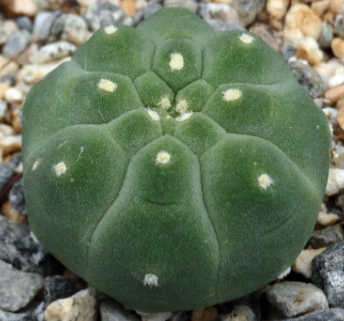
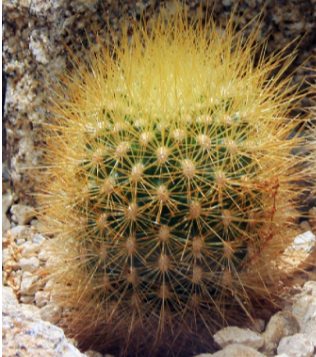

Matucana and Oroya are Peruvian Cacti, found in the Western foothills and lower mountain slopes and valleys of the Andes. These plants are not as well-known as many other South American cacti, even though they have wonderful body colors, spines, and flowers. Matucana can grow fairly rapidly, and Oroya quite a bit slower. They are not difficult plants. The general culture is similar to most other South American cacti. They need water when growing in the summer but need to be kept dry when cold. They do fine unprotected in Southern California winters.
Matucana can be quite variable in appearance, with some species being covered in dense long spines and others spineless or nearly so. Some are globular and others upright. Probably the most popular species is Matucana madisoniorum, a small attractive species with distinctive green skin, few spines, and interesting folds and ridges. One thing that adds to the popularity of this species is its passing resemblance to Lophophora (Peyote). Owning Lophophora is illegal (especially in California) while Matucana is not, so it can function as something of a substitute in people’s collections.
Matucana has posed taxonomic problems since its discovery. The genus Matucana was originally described by Britton and Rose in their book, The Cactaceae, published in 1922. The type species is Matucana haynei, a plant known since the 1840s, under several different names. The genus is named after Matucana, the town near which the plant was originally found. In their original publication, Britton and Rose commented on the close resemblance of the flowers to Borzicactus, the size, shape, and color being the same. In 1960 Myron Kimnach moved the entire genus to Borzicactus. Frederich Ritter re-segregated it in 1966, with the addition of some new species, which is the way it can be found in most recently printed references, picture collections and catalogs. To make things more confusing Curt Backeberg created a segregate genus Submatucana for some species. Botanists today don’t recognize Submatucana, but it is possible you’ll see it in a book or a plant label. If you do, just ignore the “Sub” and call it Matucana. There may be as many as 15 or 16 species, depending on the reference. Many of the species have a number of varieties, forms and cultivars, many of which are indistinguishable. Most of the species are rather variable, and there are more names than there should be.
Oroya was also described by Britton and Rose, on the same page as Matucana. This genus, of only two or three species, has escaped most of the taxonomic chaos of Matucana. The type species is Oroya peruviana, the genus again named after a nearby town. The type was known by a different name since 1903. In habitat Oroya is a flattened globe, with only the upper surface usually visible. In cultivation the plant shows off a beautiful spiral pattern of spines, with geometric precision equal to any Mammillaria.

 Gates Cactus and Succulent Society