
March 13th at 7pm PST
Redlands Church of the Nazarene
1307 East Citrus Avenue
Redlands, CA 92374
Speaker Biography
I was about 5 years old when my dad introduced me to the cacti of the Mojave Desert. As the years passed, I became really fascinated with these wonderful plants and their near relatives, the other succulents. Soon after my introduction to the Mojave Desert cacti, I started my own cactus garden, and a coveted collection of rare potted specimens. In the late 1960’s I became a totally addicted “cactophile.” I joined the Los Angeles, the San Gabriel, and the Long Beach Cactus and succulent societies, and soon became a very active member of these clubs. Over the last 55 years I have been privileged to be very active in many cactus society leadership roles, (President, V. P., Show Chair, Newsletter editor, Program Chair, Conservation Chair, Plant of the Month, etc,).
During these early years I also introduced the first cactus T-shirts, which are still popular today. I then quickly dedicated myself to doing extensive field work to study and photograph the cacti and other succulents from all around the world. With my contributions to American C&S societies, I have now received Honorary Life memberships from 14 clubs. Currently I am the president of the Santa Fe CSC.
After finishing my Bachelors and Master’s degrees in Graphics, Architecture and Art at Cal State University at Long Beach, I became a full-time teacher of Graphic Arts, photography and silkscreen at Antelope Valley High School in Lancaster, CA. Thus, living in the high-desert, I started to roam around the entire southwest United States. My focus was on the rare and sometimes endangered species of cacti from California, Arizona, Utah, Nevada, New Mexico and Colorado. After years of searching these amazingly beautiful regions, I turned my interest to the incredible diversity of cacti from Baja California and the mainland of Mexico. Here I seriously turned my focus to the genus Mammillaria. After almost 40 years of exploring all of Mexico I developed a giant documented collection of this genus. The Agaves, Ariocarpus, Asrtophytums, Echeverias, Echinocereus, Fouquierias, Turbinicarpus, and so on, were all soon to follow. While doing all of this field work and photography, I also developed a strong interest in the great majority of the other C&S genera from most of South America. Many trips to Argentina, Bolivia, Brazil, Chile, and Peru opened my eyes to countless other wonderful C&S such as: Copiapoas, Gymnocalyciums, Neochilenias, Neoporterias, Rebutias, Sulcorebutias, etc. As my dedication to the study of all of these plants grew, I started my trips to South Africa, Namibia, Yemen, Socotra and Madagascar. Needless to say, I became a real student to many of the eastern succulent genera, including the: Adenias, Adeniums, Aloes, Asclepiads, Chyphostemmas, Conophytums, Crassulas, Euphorbias, Lithops, and so much more, including the fantastic sculptural caudiciforms. I fell in love them all! I started my nursery (Cactus Data Plants) 50 years ago where I grew most all of the above-mentioned genera. After numerous years as a grower and a field worker, I learned from these combined disciplines how important the nursery trade is to help in the conservation and protection of so many of our favorite species. As a passionate lover of all life, I have shared many of my world experiences through my photography and publications. Much of my work, is published in various books and journals, including the Cactus Lexicon, The Xerophile, The Copiapoa, Mammillaria Handbook, and others. During the 55 years of growing and studying all of these plants, I have been lucky enough to have gained a great deal of wisdom as to their cultivation and conservation. Resulting from over 128 major field trips, I’ve been fortunate enough to have discovered seven species and even had one provisionally named in my honor, Mammillaria minnichii nn. While working with Glass, Lau, and Reppenhagen in our field studies, this allowed me to share six other new species I had discovered. These and other fellow explorers eventually described them all.
My favorite byproduct of numerous years of teaching and learning is sharing the wonderful experiences I have enjoyed. The stories I can tell, and the photography you will see, hopefully will make you a true lover of these plants, animals and their habitats. Optimistically, together may we all do our best to protect and preserve this amazing and precious wonderful wild world.
Program Description: “Texas to Tamaulipas”
For cacti, there is no richer region in the world than that of Mexico’s Sierra Madre Oriental. From Texas south into Mexico, through the states of Nuevo Leon, Tamaulipas and San Luis Potosi, the diversity of cacti is overwhelming. On this trip we will visit many breathtaking regions and explore some of the new and remote areas where many of the most prized and exciting new species have been found. As most “Cactophiles” are aware, southwestern Texas is known for its Big Bend National Park. From Marathon, Texas, down to the border along the Rio Grande, the plethora of cacti that occur in this area is amazing.
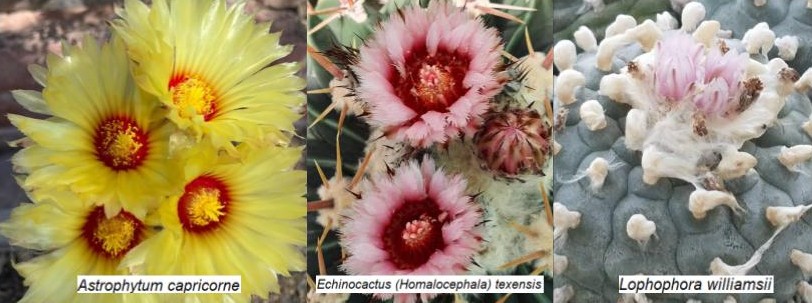
This belt represents the northern beginnings of the Chihuahuan desert environments. It is here in the deciduous thorn forest low lands, to the foothills of the Sierra Madre Oriental, that the cacti and other succulents become particularly dense. The conditions that make this one of the best areas for succulents are the dry warm western temperatures coming from Chihuahua and Coahuila, and the powerful moist storms that are generated from the Gulf of Mexico. These storms usually come to these environments during the summer months, thus making it a perfect place for cacti and other succulents to thrive.In this presentation, we will start with the northern Chihuahuan desert cacti and succulents that occur in Texas and often migrate across the border into Mexico. These genera include: Agave, Ariocarpus, Astrophytum, Coryphantha, Echeveria, Echinocactus, Echinocereus, Echinomastus, Epithelantha, Escobaria, Ferocactus, Hamatocactus, Lophophora, Mammillaria, Neolloydia, Thelocactus and Yucca. From northern Mexico we then zig-zag our way into the Monterrey expanse, and from there, we will head further south crossing the Sierra Madre Oriental in a back-and-forth pattern from the east to the west. We will conclude our southern journey once we hit the northern reaches of San Luis Potosi. The plants that occur in this extensive territory include: Agave, Ancistrocactus, Ariocarpus, Astrophytum, Aztekium, Coryphantha, Echeveria, Echinocactus, Echinocereus, Echinomastus, Epithelantha, Escobaria, Ferocactus, Geohintonia, Gymnocactus, Hamatocactus, Hectia, Jatropha, Lophophora, Mammillaria, Manfredia, Neolloydia, Obregonia, Pelecephora, Peniocereus, Sedum, Thelocactus, Turbinicarpus, Wilcoxia and Yucca. Our principal focus will be to see some of the new Gymnocactus and Turbinicarpus, as well as a few of the rare and not often seen other genera and species.
If you have never had the opportunity to travel into these fascinating regions, this is your chance to get a first-hand viewing of how and where many of these awesome plants grow.

 Gates Cactus and Succulent Society